
7 09 2026 | Actualité Spatial
Chemical propulsion systems remain indispensable for satellite attitude control, orbit correction and collision avoidance maneuvers due to their reliability and high specific impulse. In monopropellant thrusters, the catalyst initiates the rapid decomposition of the...
7 09 2026 | Actualité Spatial, Innovation et technologique
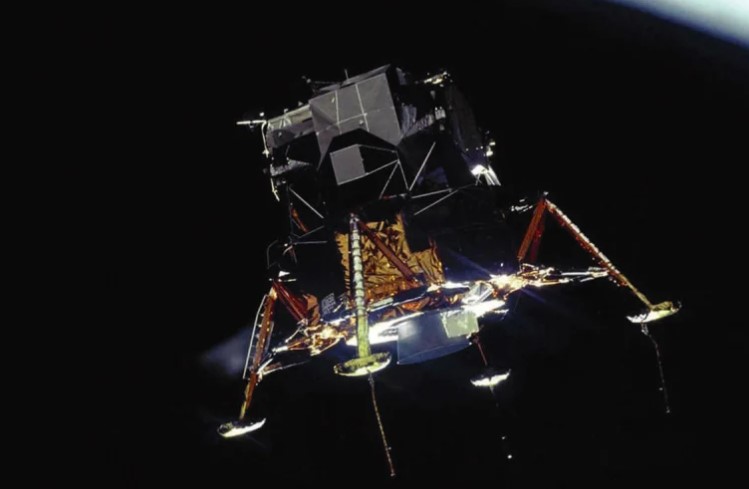
Rapid, repeatable, and cost-effective EDL sensor testing on Earth. Current methods for testing lunar lander sensors on Earth are expensive and limited. NASA developed an eVTOL unmanned aircraft to simulate lunar lander trajectories at a lower cost. The reusable...

31 08 2026 | Actualité Spatial
En associant la solution d’orchestration de réseau intelligente de l’opérateur de réseau IoT par satellite de l’américain Skywave (qui appartient à l’opérateur Orbcomm) avec le réseau de satellites en orbite basse d’Iridium en direction des fabricants...

31 08 2026 | Actualité Spatial
Project SATLASS plans to become one of the first cold gas propelled CubeSat Deployers used. Using Nitrogen gas, SATLASS will be able to place multiple CubeSats into customizable orbits autonomously. A modular housing unit will allow for 3-1U CubeSats to 1-3U CubeSat...

31 08 2026 | Actualité Spatial
Conventional metasurfaces incorporating phase-change materials (PCMs) are typically limited to small-range adjustments of the orbital angular momentum (OAM) carried by optical vortex beams. This study presents a metasurface design paradigm for the reconfigurable,...
31 08 2026 | Actualité Spatial
Chemical propulsion systems remain indispensable for satellite attitude control, orbit correction and collision avoidance maneuvers due to their reliability and high specific impulse. In monopropellant thrusters, the catalyst initiates the rapid decomposition of the...