8 06 2026 | Actualité Spatial
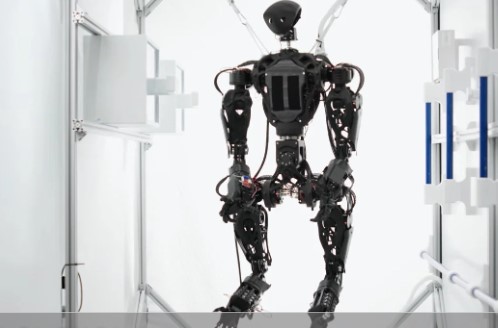
Un projet de l’ETH Zurich, Orbit Robotics, a donné naissance à Helios, un robot humanoïde conçu spécialement pour les opérations en microgravité. Contrairement aux humanoïdes classiques, il ne possède pas de jambes mais quatre bras multifonctions qui servent à la fois...
8 06 2026 | Actualité Spatial
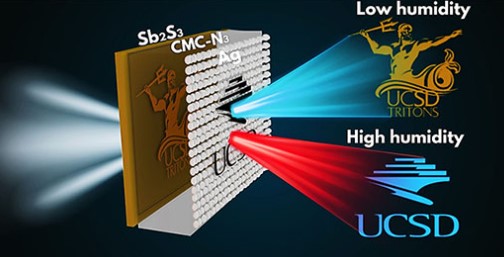
Moisture in the air changes how a tiny photonic structure reflects light, exposing concealed patterns for encryption, authentication and sensing. (Nanowerk News) Engineers at the University of California San Diego have developed an optical device that reveals hidden...
8 06 2026 | Actualité Spatial, Innovation et technologique
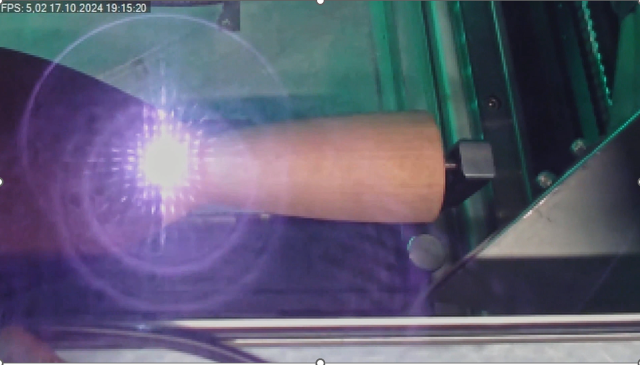
The vacuum of space makes cooling extremely challenging. The Fraunhofer Institute for Telecommunications, Heinrich-Hertz-Institut, HHI is developing technologies for thermal management in aerospace applications. The research team is using femtosecond and nanosecond...

8 06 2026 | Innovation et technologique, Actualité Spatial
42 Technology (42T) has played a central role in helping Omnisense, a company specialising in terrestrial positioning technology, to demonstrate a safer autonomous drone landing system when satellite navigation signals are unreliable. The system uses a ground-based...
8 06 2026 | Actualité Aéronautique, Actualité Spatial
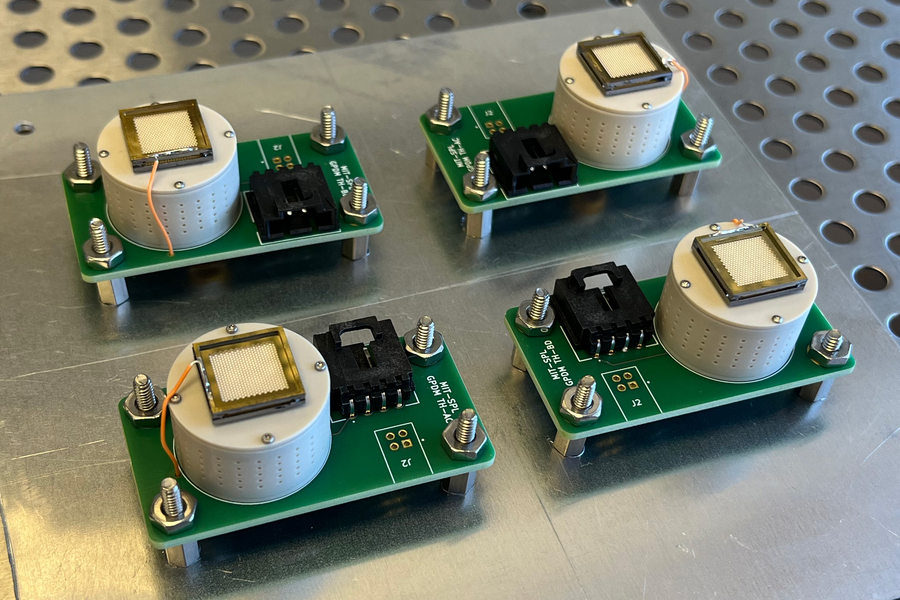
MIT engineers are testing a new propulsion system that combines the power and speed of conventional chemical thrusters with the precision and fuel-efficiency of electrical thrusters. The system could enable the design of nimbler, more flexible small satellites, which...

1 06 2026 | Actualité Spatial
Depuis le début de la conquête spatiale, les fusées classiques reposent sur la propulsion chimique. Le principe est simple et éprouvé : on expulse des gaz à très grande vitesse vers l’arrière pour générer de la poussée, souvent grâce à un puissant mélange de carburant...